You have got a SaaS idea. You know the exact problem it solves. You have probably already imagined the dashboard, core workflows, subscription tiers, and customers who will eventually pay for it.
Then comes the question that stops many founders in their tracks:
How much capital will it actually take to build this SaaS product?
You reach out for initial estimates. One software agency quotes $15,000. Another quotes $45,000. A freelance engineer proposes building it for $8,000. All three claim they can deliver your application.
So which estimate is realistic, and why do proposals vary so wildly?
The root challenge is that founders describe their ideas in terms of user-facing features, while engineers estimate the underlying architectural requirements behind those features. A simple "checkout button" sounds trivial. In production, however, a reliable subscription billing engine requires payment gateway integration, recurring billing logic, webhook listeners, failed-payment dunning, customer portal states, tax calculation, invoices, and role-based permissions.
The same dynamic applies to authentication, multi-tenant databases, real-time dashboards, and reporting pipelines. Estimating a software budget requires far more than tallying a list of features.
In this guide, you will learn how to calculate a realistic SaaS development budget based on engineering hours, blended team rates, feature complexity, UX design, automated testing, cloud deployment, and contingency buffers. You can test your own project numbers right away using our interactive calculator below.
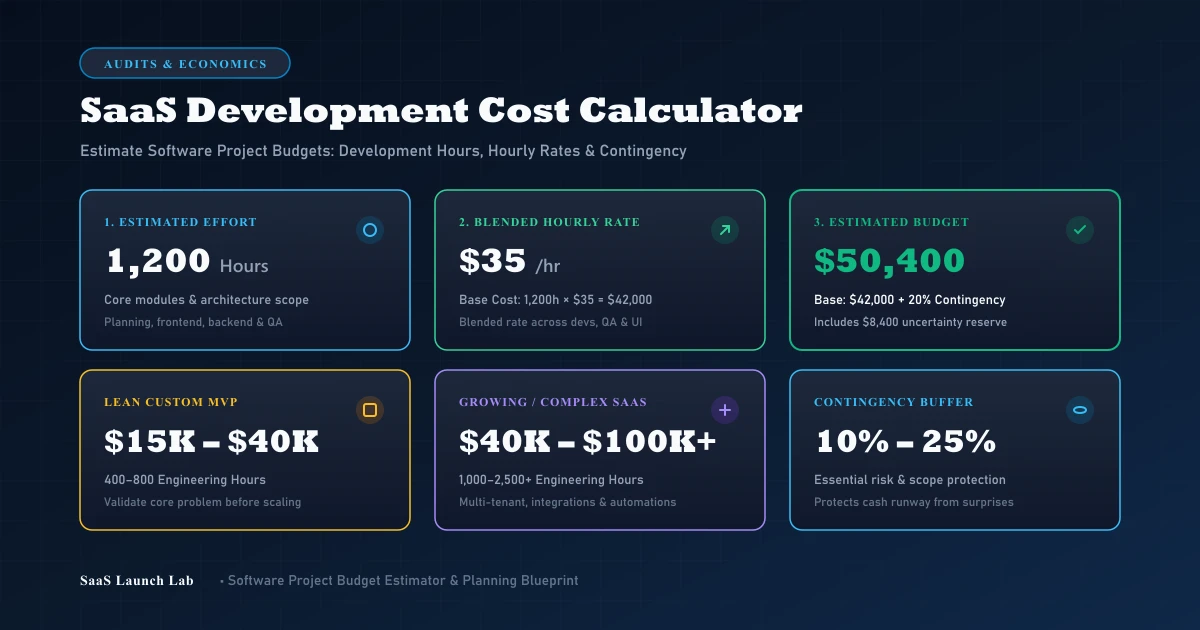
Figure 1: Architectural blueprint for SaaS development cost estimation, covering hours, hourly rates, contingency, and phase distribution.
---
Quick Answer: How Do You Calculate SaaS Development Costs?
The foundational formula for estimating custom software development is:
SaaS Development Cost = Estimated Development Hours × Blended Hourly RateTo establish your complete project budget, incorporate supporting delivery phases and financial protection:
Estimated Project Budget = Base Development Cost + Design + Testing + Deployment + Project Management + ContingencyFor example, consider a typical project scope:
- Estimated project effort: 1,200 engineering hours
- Blended development rate: $35/hour
- Base development cost: $1,200 × $35 = $42,000
- Contingency allowance (20%): $42,000 × 0.20 = $8,400
- Total estimated project budget: $42,000 + $8,400 = $50,400
Note: This is an illustrative calculation, not a vendor quote. Your actual investment depends on functional scope, team seniorities, architecture, and quality standards.
---
Interactive SaaS Development Cost Estimator
Use the live project budget calculator below to test your estimated development hours, hourly rates, and contingency buffer. Adjust the sliders to explore different project scenarios:
SaaS Development Cost Estimator
Illustrative USD estimate. Change the inputs to explore your project budget.
This is a preliminary estimate, not a vendor quotation. It excludes any costs not included in the estimated hours and rate, such as hosting, third-party services, taxes, and ongoing maintenance.
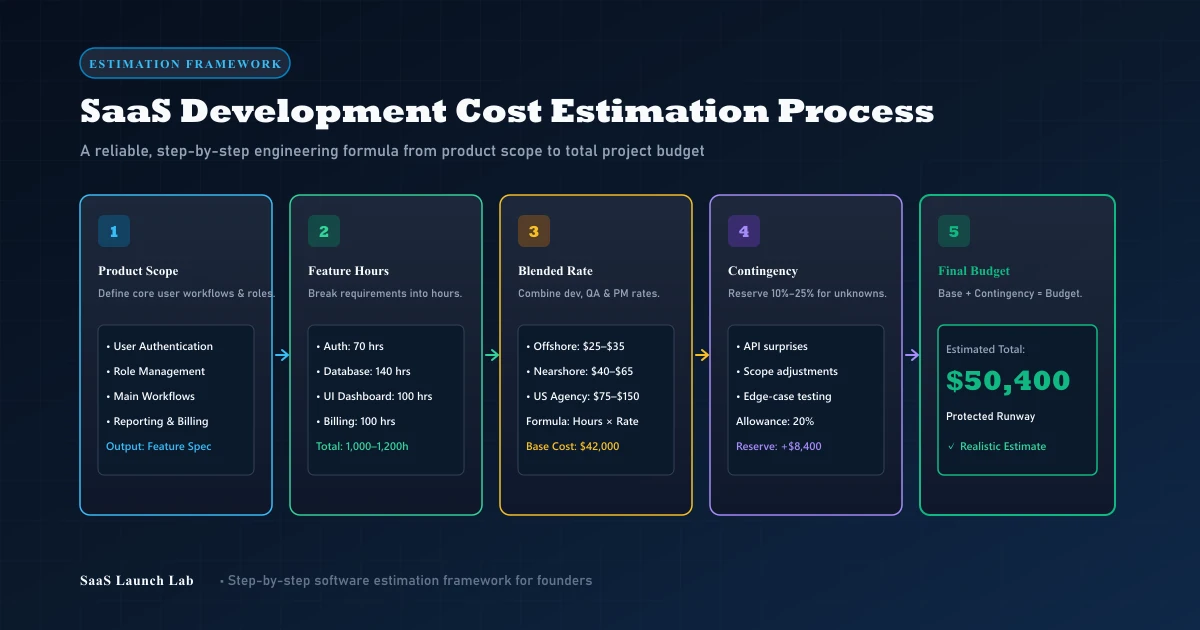
Figure 2: The 5-stage SaaS development cost estimation process: Product Scope ➔ Feature Hours ➔ Blended Rate ➔ Contingency ➔ Final Project Budget.
---
1. How to Use a SaaS Development Cost Calculator
A development cost calculator bridges the gap between an abstract product vision and a quantifiable financial budget. Instead of guessing a single top-line price, break your requirements down into measurable units of engineering effort.
A reliable software estimate requires five core inputs: 1. Product scope: The exact user problems and workflows your software solves. 2. Feature complexity: The technical difficulty, security obligations, and dependencies of each module. 3. Development hours: The cumulative time required across frontend, backend, and infrastructure. 4. Blended hourly rate: The effective combined cost per hour across your engineering team. 5. Contingency allowance: A reserved financial buffer that shields your cash runway from scope adjustments.
Step 1: Define Your SaaS Product
Start by summarizing your product in a single, unambiguous sentence:
"I am building a cloud-based project management SaaS that allows marketing teams to organize multi-channel campaigns, collaborate with contractors, track deliverables, and manage paid subscriptions."
This concise definition anchors your scope, preventing feature creep before you begin calculating numbers.
Step 2: Identify Your Required Features
Divide your application into discrete functional modules. For an early-stage B2B SaaS, your launch scope typically includes:
| Module | Core Functionality Required |
|---|---|
| Authentication | Sign up, email/password login, password resets, session management |
| User & Team Management | User profiles, workspace invitations, team member roles |
| Interactive Dashboard | Project status summaries, recent activity feeds, search |
| Project Workflows | Create, update, archive, and manage campaign deliverables |
| Task Management | Task assignments, due dates, status boards, and tags |
| Collaboration & Alerts | In-app comments, activity logs, and email notifications |
| Subscription & Billing | Stripe billing integration, tier management, customer portal |
| Administration Portal | Account management, platform metrics, tenant overview |
| Reporting & Data Export | Progress summaries, CSV exports, campaign metrics |
Separate launch-critical features from nice-to-have enhancements. For early validation, you can safely postpone advanced AI recommendations, enterprise SSO, and custom webhook builders until after you have confirmed paying customer demand.
Step 3: Estimate Development Hours
Every module demands a distinct level of engineering effort. Building a standard user profile page is relatively quick; engineering a secure, isolated multi-tenant SaaS architecture with row-level security and automated subscription billing requires significantly deeper effort.
Estimate hours on a per-module basis rather than applying a single arbitrary figure to the entire application.
Step 4: Enter Your Development Rate
Your hourly development rate depends heavily on team seniority, location, and engagement model. A project usually combines specialized contributors: senior backend engineers, frontend developers, UI/UX designers, and QA testers.
Using a blended hourly rate accounts for these mixed skill levels into a unified planning metric.
Step 5: Add a Contingency Allowance
Initial software specifications always contain unknowns. Third-party APIs may have undocumented rate limits, edge-case user states will surface during testing, and user feedback will demand adjustments.
A 10% to 25% contingency reserve protects your startup from running out of capital before reaching market launch.
---
2. SaaS Development Cost Breakdown by Feature
To understand where engineering budgets go, examine how individual technical modules translate into development hours.
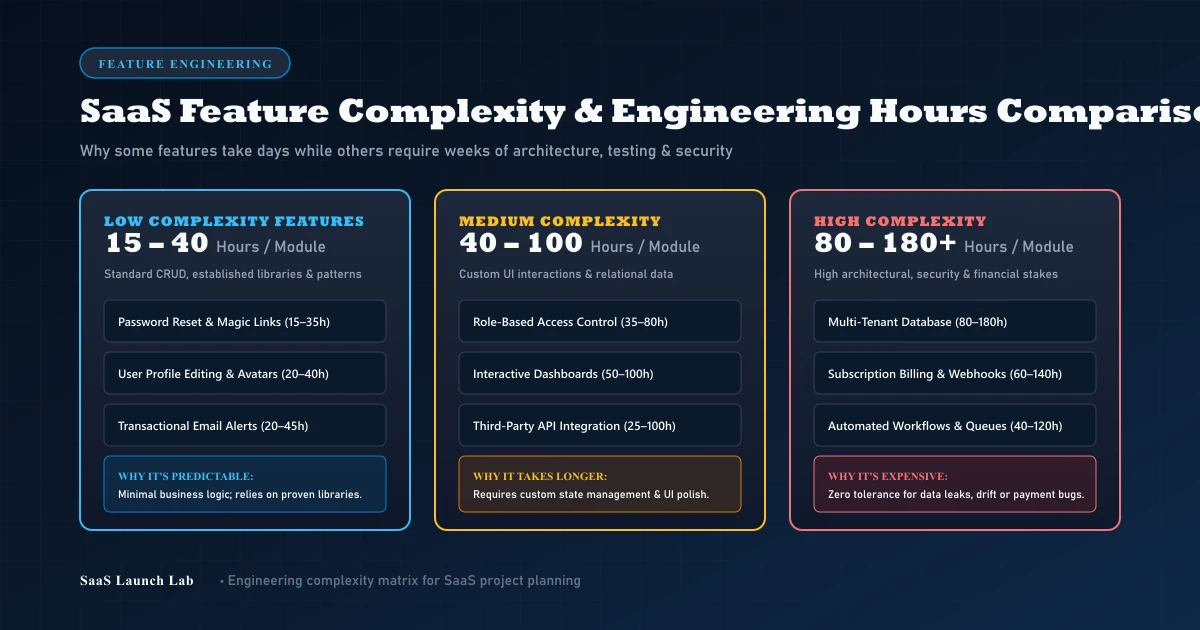
Figure 3: Feature complexity comparison: Low (15–40h), Medium (40–100h), and High (80–180h) engineering demands.
Feature Complexity & Engineering Hours
The table below outlines typical engineering-hour planning ranges for common SaaS features. For an even more granular analysis, review our detailed SaaS feature development cost breakdown.
| SaaS Feature Module | Estimated Hours | Technical Complexity | Core Engineering Tasks |
|---|---|---|---|
| User registration & login | 40–80 | Low–Medium | Auth endpoints, JWT tokens, session persistence, security checks |
| Password reset & email verification | 15–35 | Low | Token generation, expirable magic links, email dispatch |
| User profile management | 20–40 | Low | Profile editing, avatar uploads, timezone/account settings |
| Role-based permissions (RBAC) | 35–80 | Medium | Role matrices (Admin, Member, Viewer), middleware guards |
| Customer user dashboard | 50–100 | Medium | Data fetching, interactive widgets, responsive layout, caching |
| Admin management portal | 60–120 | Medium | User search, account suspension, audit logs, tenant visibility |
| Multi-tenant database setup | 80–180 | High | Tenant schema isolation, row-level security (RLS), migration scripts |
| Database design & optimization | 40–100 | Medium–High | Relational schema, indexing strategies, foreign key constraints |
| Subscription billing & customer portal | 60–140 | High | Stripe Billing/Paddle, webhook handlers, plan upgrades/dunning |
| Payment gateway processing | 30–80 | Medium–High | Checkout sessions, PCI-compliant card handling, invoice generation |
| Transactional email notifications | 20–45 | Low–Medium | Template design, Resend/SendGrid API, delivery tracking |
| Third-party API integrations | 25–100 | Medium–High | OAuth flows, external API rate limiting, webhook synchronization |
| Reporting & data analytics | 40–100 | Medium–High | SQL aggregation queries, charting libraries, CSV/PDF exporters |
| Search & advanced filtering | 20–60 | Medium | Full-text search, multi-parameter filtering, debounced queries |
| File uploads & object storage | 25–60 | Medium | S3/GCS pre-signed URLs, asset compression, mime-type validation |
| Automated workflows & queues | 40–120 | High | Redis/BullMQ background queues, scheduled cron jobs, retries |
| Automated testing & CI/CD deployment | Scope-dependent | Medium–High | Unit tests, end-to-end integration tests, container deployment |
Note: These ranges serve as budgeting assumptions. Production-grade software demands thorough error handling, security hardening, and operational observability.
Example: Calculate a Project Using Feature Hours
Imagine scoping a focused B2B SaaS MVP with the following core modules:
| Core Feature Module | Estimated Engineering Hours |
|---|---|
| Authentication & onboarding | 70 |
| User profile & team roles | 45 |
| Main workflow dashboard | 100 |
| Multi-tenant database architecture | 140 |
| Subscription billing & payments | 100 |
| Transactional alerts & notifications | 35 |
| Basic reporting & CSV exports | 70 |
| Internal administrative tools | 80 |
| Total Estimated Effort | 640 hours |
Applying a blended development rate of $35 per hour:
640 hours × $35/hour = $22,400 (Base Development Cost)
Adding a standard 20% contingency buffer to absorb scope adjustments:
$22,400 × 1.20 = $26,880 (Estimated Project Budget)
Before locking in this budget, ensure that your quote explicitly specifies whether UI/UX design, QA testing, DevOps configuration, and post-launch bug fixing are included in those 640 hours.
---
3. How Much Does It Cost to Build Different Types of SaaS Products?
Software projects vary dramatically depending on the architectural depth, security standards, and scale they must support. A basic internal workflow tool requires vastly different engineering resources than a SOC 2-compliant multi-tenant enterprise suite.
For an extensive analysis of market figures, consult our complete SaaS development cost breakdown.
| Product Classification | Illustrative Project Budget | Typical Delivery Scope | Target Launch Timeline |
|---|---|---|---|
| No-code prototype | $1,000–$8,000 | Form workflows, Bubble/Webflow prototype, basic validation | 2–4 weeks |
| Lean custom SaaS MVP | $15,000–$40,000 | Core problem workflow, secure auth, billing, initial users | 1–3 months |
| Growing SaaS product | $40,000–$100,000 | Granular roles, multiple integrations, reporting, queues | 3–6 months |
| Complex SaaS platform | $100,000–$250,000 | High concurrency, multi-region database, advanced security | 6–9 months |
| Enterprise SaaS suite | $250,000+ | SSO/SAML, compliance auditing, custom SLAs, dedicated infrastructure | 9–12+ months |
A. No-Code SaaS Prototype
No-code platforms (such as Bubble, Webflow, and Make) allow non-technical founders to rapidly test customer willingness to pay before writing custom code.
- Typical scope: Form submissions, simple dashboards, templated authentication, basic Zapier integrations.
- Ideal use case: Validating that an audience actually wants a problem solved before investing $30,000+ in custom engineering.
- Key limitations: Limited database query performance at scale, platform lock-in, recurring tool subscription fees, and difficult code migration when transitioning to a custom stack.
B. Lean Custom SaaS MVP
A custom Minimum Viable Product focuses relentlessly on solving one core problem exceptionally well using modern frameworks like Next.js, PostgreSQL, and Supabase (see our roadmap on building a SaaS MVP in 30 days).
- Typical scope: Production-grade authentication, core workflow engine, multi-tenant database structure, Stripe billing integration, and basic administration.
- Strategic objective: Delivering tangible customer value with the smallest possible codebase, establishing real user feedback loops without burning through startup runway.
C. Growing SaaS Product
Once an MVP secures initial paying customers and validates SaaS unit economics, product requirements expand to support customer retention:
- Typical scope: Granular team permission matrices, automated asynchronous workflows, rich analytics dashboards, external CRM/Slack integrations, and optimized database indexing.
- Prioritization rule: Every new feature should be justified by demonstrable customer demand or retention data, avoiding the trap of building speculative features in isolation.
D. Enterprise SaaS
Enterprise software carries substantial engineering requirements driven by corporate procurement, security, and compliance standards:
- Typical scope: Single Sign-On (SAML/Okta SSO), SCIM directory synchronization, immutable audit trails, SOC 2 Type II compliance controls, data residency guarantees, and dedicated database clustering.
- Cost driver: The budget is dictated by rigorous compliance documentation, enterprise security auditing, and high-availability SLAs, rather than UI complexity alone.
---
4. How Developer Hourly Rates Affect Your SaaS Budget
Your development team's hourly rate represents the largest single variable in your total project expenditure. A 1,000-hour engineering project can range from $25,000 to over $100,000 depending on your sourcing strategy.
According to the Clutch Software Development Company Pricing Guide, listed development agencies typically bill within the following regional bands: - Offshore engineering teams (e.g., India, Eastern Europe, Southeast Asia): $25 – $49 / hour - Nearshore engineering teams (e.g., Latin America): $40 – $70 / hour - US & Western European boutique agencies: $75 – $175+ / hour - Elite enterprise consultancies: $200 – $350+ / hour
Example: One Project, Different Hourly Rates
To visualize the financial impact of hourly rates, compare the base development cost of a 1,000-hour project across rate tiers:
| Blended Hourly Rate | Base Development Cost (1,000h) | With 20% Contingency | Typical Team Composition |
|---|---|---|---|
| $25 / hour | $25,000 | $30,000 | Junior offshore developers or independent freelancers |
| $35 / hour | $35,000 | $42,000 | Experienced offshore agency with dedicated QA and PM |
| $50 / hour | $50,000 | $60,000 | Experienced nearshore software engineering studio |
| $75 / hour | $75,000 | $90,000 | Senior independent software architects or US dev shops |
| $100 / hour | $100,000 | $120,000 | Specialized North American / UK SaaS design and build agency |
Strategic Takeaway: The lowest hourly rate does not guarantee the lowest total project cost. An inexperienced developer billing $25/hour who requires 1,600 hours to deliver a buggy, unindexed architecture costs $40,000—plus thousands more in technical debt and refactoring. A disciplined senior team billing $60/hour that delivers a clean, scalable product in 700 hours costs $42,000, delivers two months earlier, and scales seamlessly.
---
5. Don't Forget These Costs When Calculating Your SaaS Budget
A frequent planning mistake made by first-time founders is treating software development solely as coding time. Building a viable software product requires a multidisciplinary lifecycle:
UI/UX Design
Engineering without user experience design results in clunky, confusing interfaces that drive users to churn. Design deliverables encompass user persona journeys, wireframes, high-fidelity Figma components, mobile responsive views, and interactive prototypes. Expect design to represent 12% to 18% of your initial development budget.
Project Management
Someone must translate product requirements into user stories, organize two-week development sprints, manage milestone delivery, and facilitate daily communication. A dedicated technical project manager or product owner typically accounts for 10% to 15% of engineering effort, preventing misunderstandings that lead to expensive code rework.
Quality Assurance
Thorough QA involves far more than clicking buttons in a browser. It requires structured functional testing, cross-browser compatibility checks, mobile responsiveness audits, API regression tests, security boundary validation, and load testing. Skipping dedicated QA pushes bugs into production, damaging your early brand reputation.
DevOps and Deployment
Your application requires a scalable, secure cloud production environment. This work includes containerizing services (Docker), configuring automated CI/CD deployment pipelines (GitHub Actions), setting up Web Application Firewalls (WAF), provisioning SSL certificates, and configuring automated database backups.
Third-Party Integrations
Most modern SaaS platforms rely on specialized third-party services: - Payment orchestration (Stripe, Lemon Squeezy, Paddle) - Transactional email dispatch (Postmark, Resend, SendGrid) - Error tracing & performance observability (Sentry, Datadog) - User analytics (PostHog, Mixpanel)
While integrating these APIs requires upfront development hours, account for their recurring monthly service fees in your operational plan.
Maintenance and Support
Launching your software is the midpoint, not the finish line. Post-launch operations require ongoing operating capital: - Routine operating system and dependency security patches - Third-party API deprecations and version updates - Performance monitoring and slow query optimization - Customer-reported bug fixes and minor UX enhancements
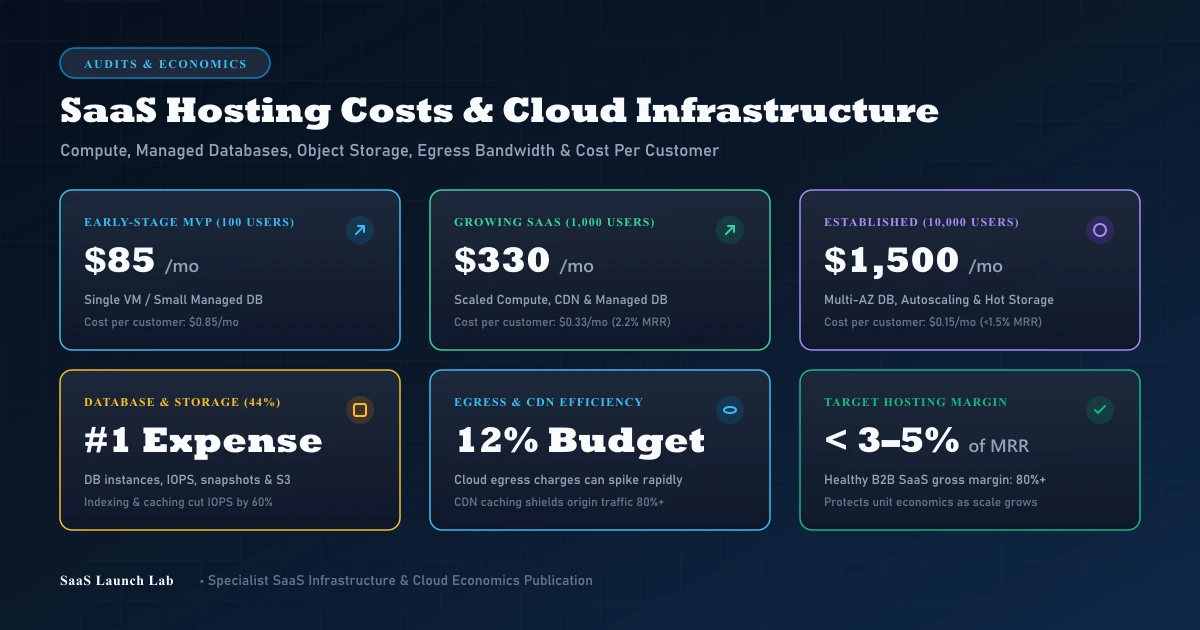
As a rule of thumb, budget 15% to 20% of your initial development cost annually for ongoing software maintenance. Development is a one-time capital investment; maintenance and SaaS hosting costs are recurring operational expenses. Keep these categories clearly separated in your financial model.
---
6. SaaS Development Cost Estimation: A Complete Worked Example
To understand how a comprehensive SaaS budget comes together, let's walk through an end-to-end estimate for a hypothetical B2B SaaS application.
Product Concept: A multi-tenant team productivity platform featuring workspace invitations, project boards, task assignment workflows, automated email digests, CSV reporting, and paid Stripe subscription tiers.
Phase 1: Product Planning and Design
| Work Item | Engineering / Design Hours | Deliverables |
|---|---|---|
| Technical discovery & scope specification | 40 | PRD, data dictionary, technical architecture map |
| User journey mapping & wireframing | 35 | Low-fidelity UX wireframes for all core screens |
| High-fidelity UI/UX design & design system | 65 | Figma design system, desktop & mobile UI views |
| Phase 1 Subtotal | 140 hours | Complete design specs and architecture blueprint |
Phase 2: Backend and Database
| Work Item | Engineering Hours | Deliverables |
|---|---|---|
| Backend API architecture & framework setup | 50 | REST/GraphQL server, middleware, error handling |
| Relational database design & schema indexing | 55 | PostgreSQL schema, migrations, connection pooler |
| Authentication, session security & RBAC | 70 | JWT/Cookie auth, password reset, permission matrix |
| Multi-tenant workspace data isolation | 100 | Tenant scoping, row-level security, tenant middleware |
| Phase 2 Subtotal | 275 hours | Scalable, multi-tenant backend foundation |
Phase 3: Frontend Development
| Work Item | Engineering Hours | Deliverables |
|---|---|---|
| Application shell & responsive dashboard | 100 | Authenticated layout, sidebar, state management |
| User & workspace team management | 55 | Team invitations, role switching, profile editing |
| Core project & task workflows | 85 | Task creation, status boards, activity timelines |
| Reporting interfaces & data visualizations | 65 | Chart widgets, filter bars, CSV/PDF export flows |
| Phase 3 Subtotal | 305 hours | Fast, fully interactive client application |
Phase 4: Integrations and Billing
| Work Item | Engineering Hours | Deliverables |
|---|---|---|
| Stripe subscription integration & webhooks | 65 | Checkout, customer portal, billing webhook states |
| Transactional email integration | 30 | Postmark/Resend templates, automated event triggers |
| External API integrations & webhooks | 45 | Inbound/outbound webhook handlers, API rate limiter |
| Phase 4 Subtotal | 140 hours | Complete recurring monetization engine |
Phase 5: QA and Launch
| Work Item | Engineering Hours | Deliverables |
|---|---|---|
| Functional end-to-end QA testing | 65 | Test cases, cross-browser audits, security validation |
| Bug triage, regression testing & polish | 45 | Issue remediation, performance optimization |
| Cloud infrastructure provisioning & CI/CD launch | 30 | Production deployment, automated backups, monitoring |
| Phase 5 Subtotal | 140 hours | Production-ready, verified software release |
Complete Project Estimate
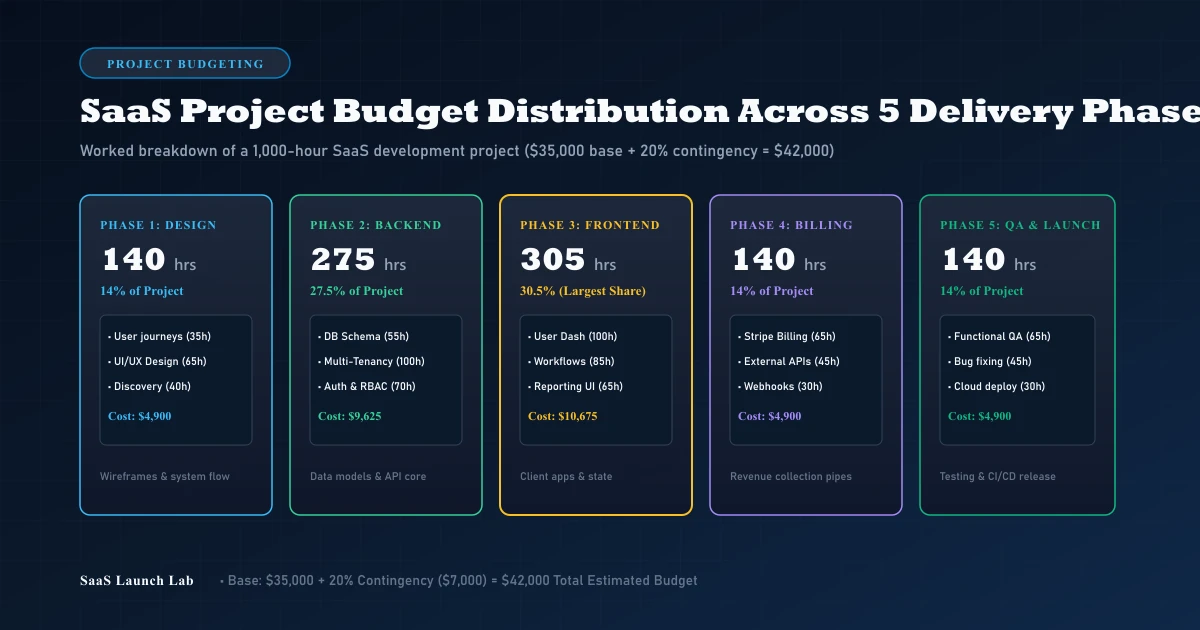
Figure 4: Allocation of 1,000 engineering hours across design, backend, frontend, billing, and QA.
| Project Phase | Estimated Hours | Percentage Allocation | Phase Cost (@ $35/hr) |
|---|---|---|---|
| Phase 1: Planning & Design | 140 | 14.0% | $4,900 |
| Phase 2: Backend & Database | 275 | 27.5% | $9,625 |
| Phase 3: Frontend Development | 305 | 30.5% | $10,675 |
| Phase 4: Integrations & Billing | 140 | 14.0% | $4,900 |
| Phase 5: QA & Deployment | 140 | 14.0% | $4,900 |
| Total Base Project Effort | 1,000 hours | 100% | $35,000 |
| Contingency Allowance (20%) | — | — | $7,000 |
| Estimated Total Project Budget | — | — | $42,000 |
Note: This comprehensive estimate assumes design, PM, QA, and deployment are bundled into the 1,000 hours. Ongoing cloud hosting, third-party software subscriptions, and post-launch marketing are budgeted separately.
---
7. How to Reduce SaaS Development Costs Without Sacrificing Quality
Trimming your software budget should never mean cutting corners on database security or releasing a slow, buggy product. The smartest way to lower costs is eliminating unnecessary scope and focusing capital on what customers truly care about.
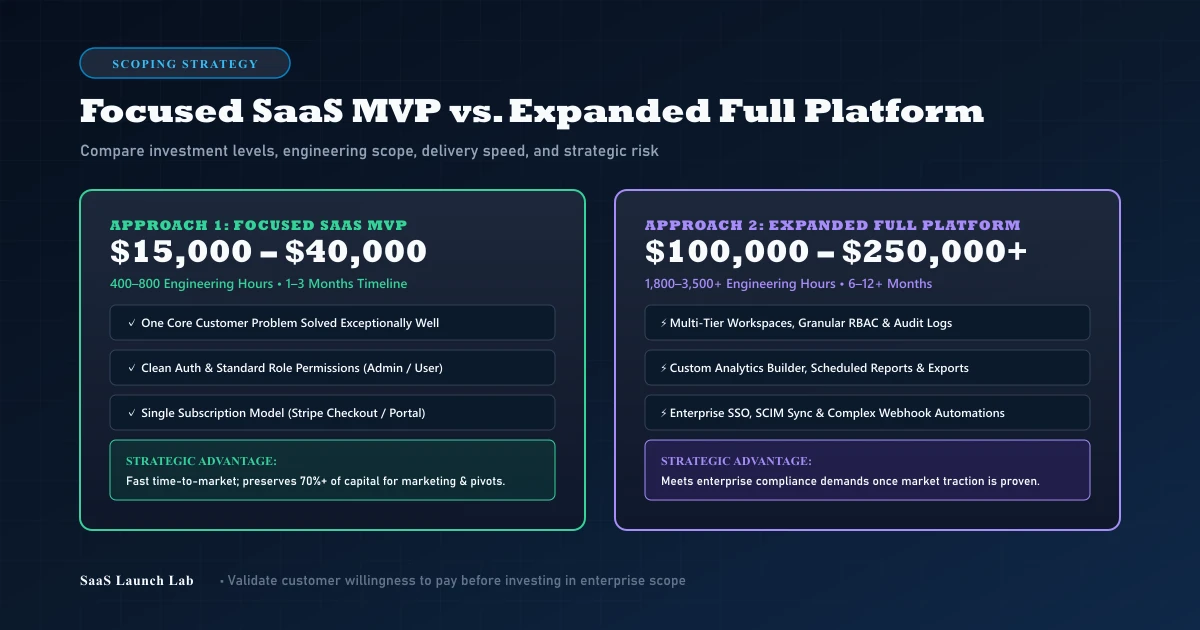
Figure 5: Scoping comparison between a focused lean SaaS MVP and an expanded enterprise platform.
1. Build an MVP Instead of a Complete Platform
Avoid the common trap of engineering an entire multi-year product roadmap before gaining a single user. If you are building a scheduling platform, your initial version needs: - Customer account registration - Service/calendar configuration - Appointment booking flow - Automated confirmation emails - Stripe payment collection
You do not need custom calendar integrations for ten different providers, complex multi-location staff shifts, or automated AI rescheduling in version 1.0. Review our guide on common SaaS MVP mistakes to avoid burning capital on unused features.
2. Prioritize Features Using MoSCoW
Sort every requested feature into the MoSCoW prioritization framework: - Must Have: Features critical for the core workflow. Without these, the product cannot launch. - Should Have: Important functionality that can be delivered in a fast follow-up release. - Could Have: Desirable enhancements to implement only if time and budget permit. - Won't Have (Yet): Low-priority or speculative ideas explicitly postponed to future versions.
3. Choose a Technology Stack Based on Team Capability
Selecting esoteric or overly complex technologies drives up engineering costs and makes hiring difficult. Choose proven, modern web technologies supported by rich open-source ecosystems (e.g., Next.js, Node.js/TypeScript, PostgreSQL). Standardizing your tech stack accelerates delivery and ensures seamless long-term maintenance.
4. Reuse Reliable Components
Do not waste thousands of engineering dollars building commodity software modules from scratch: - Authentication: Use Supabase Auth, Clerk, or NextAuth rather than building custom crypto hashing and session tables. - Payments: Use Stripe Checkout and the Stripe Customer Portal rather than building custom billing management interfaces. - UI Components: Use Tailwind CSS and component libraries like shadcn/ui to save hundreds of design and frontend coding hours.
5. Define Requirements Before Development Starts
Scope ambiguity is the number one cause of budget overruns. When engineers begin coding based on vague bullet points, they inevitably make assumptions that require extensive refactoring later. Document explicit user stories and acceptance criteria before developers write code.
6. Use AI Development Tools Responsibly
AI coding tools (such as GitHub Copilot and Cursor) help experienced software engineers write boilerplate, scaffold database schemas, and generate test suites up to 30% faster. However, AI cannot design your system architecture or ensure tenant isolation. Measure productivity gains against quality code reviews rather than expecting AI to eliminate development costs entirely.
---
8. Fixed-Price vs Hourly Development: Which Is Better for Your SaaS Project?
The structure of your development contract directly influences budget predictability and project agility.
| Evaluation Metric | Fixed-Price Contract | Hourly / Time & Materials |
|---|---|---|
| Budget Predictability | High for the exact documented scope | Variable; tied directly to actual hours billed |
| Handling Scope Changes | Requires formal change orders & renegotiation | Flexible; priorities adjust in weekly sprints |
| Initial Planning Demands | Requires exhaustive technical specs upfront | Can kick off with high-level wireframes & stories |
| Development Agility | Low; deviation from contract is discouraged | High; team pivots easily based on user feedback |
| Best Suited For | Well-defined modules with zero unknowns | Iterative MVP builds and evolving software |
When to Choose Fixed Price A fixed-price model works well when specifications, user flows, database models, and wireframes are 100% finalized. However, agencies build risk premiums (often 20% to 35%) into fixed-price quotes to cover unexpected complexities.
When to Choose Hourly Development For early-stage startups testing new product concepts, an hourly (Time & Materials) agreement with clear two-week milestone sprint reviews provides greater flexibility. You can refine feature scope based on user feedback after each sprint without renegotiating contracts.
---
9. SaaS Development Budget Worksheet: What to Prepare Before Hiring Developers
Before requesting formal development proposals, compile a structured project brief. Having these answers ready enables agencies to provide accurate, competitive estimates:
Product & Scope Requirements - [ ] What is the one-sentence summary of your product? - [ ] What core business problem does it solve for users? - [ ] Who are the primary user roles (e.g., Workspace Admin, Team Member, Client)? - [ ] What is the absolute minimum feature set required for launch? - [ ] Which third-party integrations are mandatory for launch?
Technical & Infrastructure Requirements - [ ] Will this be a web application, mobile app, or both? - [ ] Do you have a preferred technology stack or cloud provider? - [ ] What are your tenant isolation and data security requirements? - [ ] What is your anticipated initial user volume and database growth?
Timeline & Budget Parameters - [ ] What is your target public launch deadline? - [ ] What is your total capital allocation for initial development? - [ ] Do you require UI/UX design from the agency, or will you supply Figma files? - [ ] Who owns DevOps configuration and ongoing cloud maintenance?
Commercial & Legal Terms - [ ] Does your contract guarantee 100% intellectual property and code ownership upon payment? - [ ] What warranty or bug-fixing period is included post-launch (typically 30–90 days)? - [ ] Are payments tied to verifiable milestone deliverables rather than calendar dates?
---
Frequently Asked Questions
How do I calculate SaaS development costs?
Multiply your estimated engineering hours by your team's blended hourly rate: Base Cost = Hours × Hourly Rate. Then add allowances for UI/UX design, QA testing, DevOps configuration, and a 10% to 25% contingency buffer for scope uncertainty. Keep ongoing SaaS hosting and infrastructure costs separate from your development budget.
How much does it cost to build a SaaS MVP? A focused, custom SaaS MVP typically costs between $15,000 and $40,000, representing roughly 400 to 800 engineering hours at a blended rate of $35 to $50 per hour. Simple no-code prototypes can be built for under $8,000, while complex platforms with custom workflows or compliance requirements can exceed $75,000.
How many hours does it take to develop a SaaS application? A lean SaaS MVP typically requires 400 to 800 development hours. A growing product with advanced reporting, integrations, and automated workflows takes 1,000 to 1,800 hours. Complex enterprise platforms often exceed 2,500 hours across cross-functional engineering teams.
What is the biggest factor affecting SaaS development costs? Scope and architectural complexity are the primary cost drivers. Building standard web forms takes minimal time; implementing real-time data sync, multi-tenant database isolation, complex webhook billing engines, and enterprise security controls accounts for the majority of engineering hours.
Is hiring a freelancer cheaper than hiring a software development agency? Freelancers typically offer lower hourly rates because they carry less overhead. However, building a complete SaaS product requires multiple disciplines: frontend engineering, backend architecture, UI/UX design, DevOps, and QA. An agency provides a cohesive, pre-vetted team, whereas hiring individual freelancers requires founders to manage coordination, code quality, and delivery timelines.
Should I build an MVP or a complete SaaS platform? Build a focused MVP first. Validating whether customers will pay for your core solution with minimal initial capital protects your startup from spending $80,000+ on features that users ultimately ignore. Expand the platform incrementally based on customer feedback.
Does SaaS development cost include hosting? No. Development proposals cover the upfront engineering time to design, build, and deploy the application. Recurring cloud hosting, database clusters, domain registrations, and third-party API subscriptions (e.g., AWS, Stripe, Postmark) are ongoing operational expenses billed directly by the providers.
How much contingency should I add to my SaaS budget? Reserve a 10% to 25% contingency allowance above your base development estimate. If your requirements are rigorously documented with wireframes, a 15% buffer is standard. If your specifications are high-level or involve complex third-party API integrations, budget a 20% to 25% buffer.
Can AI tools reduce SaaS development costs? AI development tools (like GitHub Copilot and Cursor) improve developer productivity by accelerating boilerplate code, unit test generation, and documentation. While this can shorten delivery timelines by 15% to 30%, AI does not eliminate the need for experienced software engineers to design architectures, conduct security reviews, and manage deployments.
What should a SaaS development quotation include? A thorough quotation should include an itemized scope breakdown, deliverables per milestone, estimated timeline, team roles, technical assumptions, explicit exclusions, source code ownership terms, warranty/bug-fix periods, and payment schedules.
---
Conclusion: Calculate Before You Commit to Building
Building a software product is an exciting journey, but launching blindly without a realistic financial roadmap is dangerous.
Before writing a line of code or signing an agency proposal, document your requirements clearly. Break your application into functional modules, estimate engineering hours realistically, apply a verified blended rate, and always reserve a contingency buffer.
A successful SaaS project is never determined by who spends the most money. It is determined by the founder who scopes strategically, validates customer willingness to pay early, protects their capital runway, and builds a sustainable foundation for scaling a SaaS business.
Use our SaaS development cost calculator to test your assumptions, model your budget, and build with clarity.
---
Recommended Further Reading
Explore related SaaS Launch Lab engineering and cost-planning resources:
- [Complete SaaS Development Cost Breakdown](/blog/saas-development-cost): Deep dive into total software development budgeting and agency rate analysis.
- [Detailed SaaS Feature Development Cost Breakdown](/blog/saas-platform-development-cost-2025-2026-per-feature): Comprehensive per-feature cost benchmarks across authentication, billing, and databases.
- [SaaS Product Development Process](/blog/saas-product-development): Step-by-step product development roadmap from concept to deployment.
- [SaaS Hosting and Infrastructure Costs](/blog/saas-hosting-costs): Complete guide to budgeting for cloud compute, databases, S3 storage, and bandwidth.
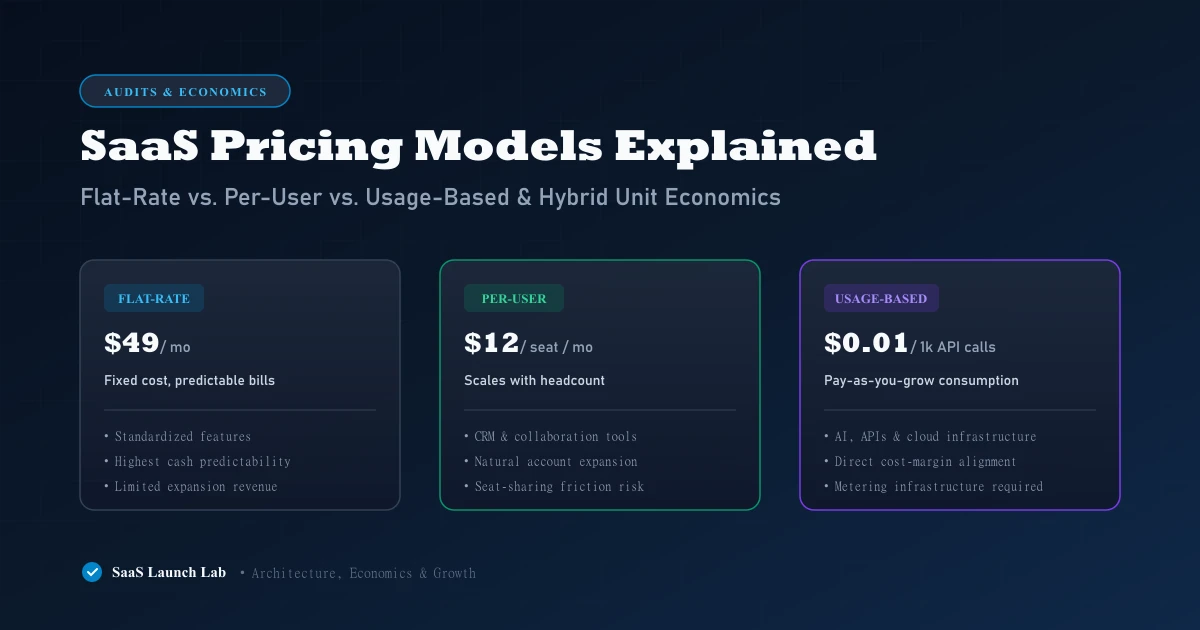
- [SaaS Pricing Models Explained](/blog/saas-pricing-models): Align your monetization strategy with customer value and delivery costs.
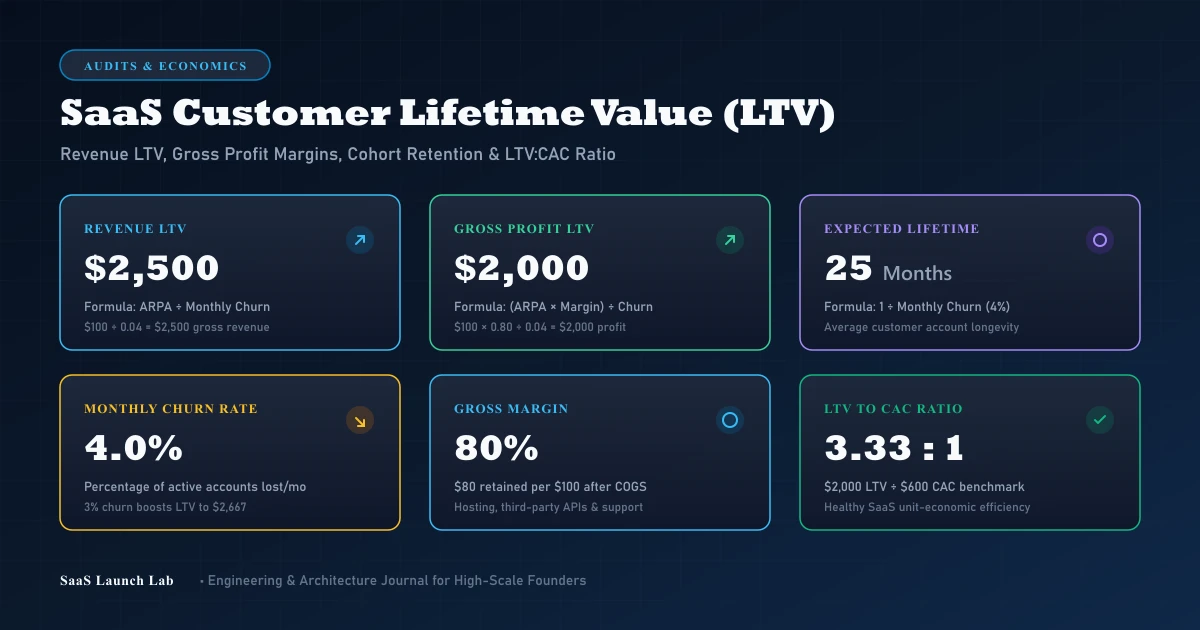
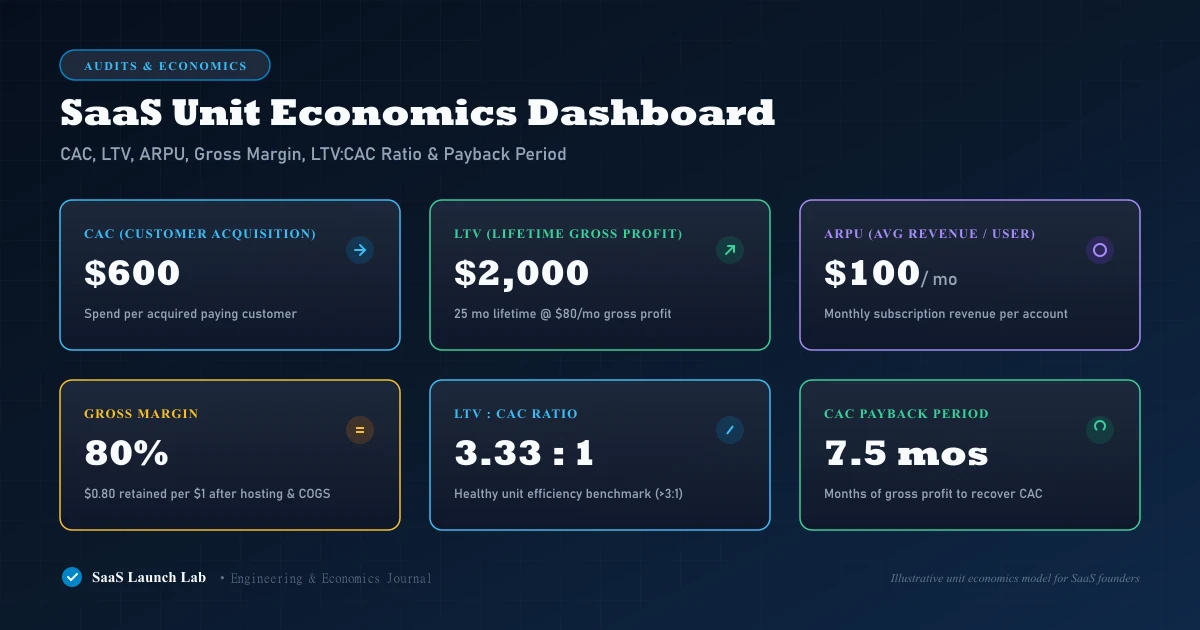
- [SaaS Unit Economics: CAC, LTV, ARPU & Gross Margin](/blog/saas-unit-economics): Build a financially viable and sustainable recurring revenue business model.
- [How to Turn a Spreadsheet Into a SaaS Product](/blog/how-to-turn-a-spreadsheet-into-a-saas-product): Transition manual spreadsheets into scalable multi-tenant software.
- [Why Most SaaS MVPs Fail in the First 90 Days](/blog/why-most-saas-mvps-fail): Crucial pitfalls to avoid during early scoping and customer validation.
- [How to Build a SaaS MVP in 30 Days](/blog/saas-mvp-in-30-days): Fast-track your launch timeline using modern full-stack web stacks.
- [Multi-Tenant SaaS Architecture Guide](/blog/multi-tenant-saas-architecture): Engineer secure, scalable tenant isolation for modern cloud software.
External References & Market Research: - Clutch – Software Development Company Pricing Guide 2026 - U.S. Bureau of Labor Statistics – Software Developers Occupational Outlook - FinOps Foundation – Cloud Financial Management Framework - OWASP Application Security Verification Standard (ASVS)
Editorial Note: All development hour ranges and financial calculations in this article are illustrative planning estimates based on industry benchmarks. Review formal proposals with your chosen engineering partners before entering commercial agreements.